|
Getting your Trinity Audio player ready...
|
Dangote Group is moving to build its own shipping fleet, a decision that gets to the heart of one of the most persistent problems facing Nigeria’s industrial export ambitions: there simply aren’t enough vessels available to move what the country produces. Sada Ladan-Baki, head of international trade export at Dangote Cement, confirmed the plan at a recent seminar on non-oil exports, telling attendees the company is moving forward to acquire its own ships after struggling to find commercial capacity even for relatively modest shipments to neighboring markets.
The scale of the problem is almost hard to believe given how large Dangote’s operations already are. Africa’s richest man reportedly couldn’t find a single available vessel to transport just 1,000 tonnes of cement from Nigeria to nearby Ghana, a shipment that would barely register as a rounding error against the group’s total production capacity. That gap between industrial output and available maritime logistics has pushed Dangote toward a familiar playbook: when existing infrastructure can’t support the business, build it yourself.
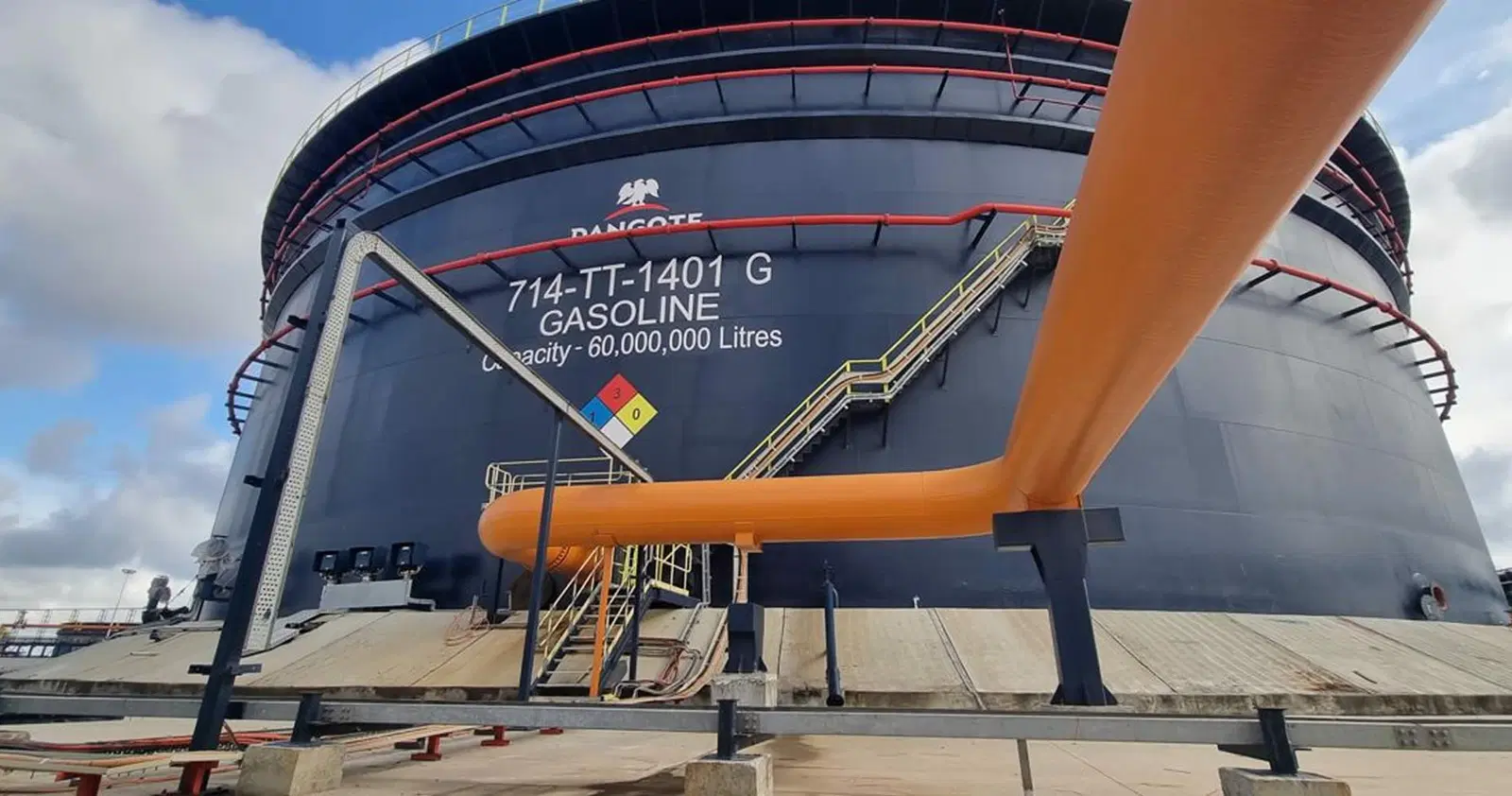
This isn’t the company’s first move into maritime infrastructure. Dangote Group already operates dedicated port terminals at Onne and Apapa, and it built a jetty at Lekki in Lagos specifically to handle vessel traffic tied to its $20 billion refinery. That refinery alone has become a maritime operation in its own right. Since starting operations, the facility has received roughly 800 vessels, and once it reaches full capacity, the company expects to handle close to 600 ships annually. Those numbers reflect a broader strategic shift within the Dangote empire, one that’s moving away from heavy reliance on trucking and pipeline transport and toward coastal shipping as the backbone of how products move both domestically and to export markets.
That shift has real financial logic behind it. Dangote has previously indicated it wants to move as much as 75 percent of its domestic fuel distribution through coastal shipping rather than road transport, a change that would reduce wear on Nigeria’s already strained highway network and cut the tax burden tied to overland freight. As part of that broader logistics buildout, the group is also developing a deep-sea port in the Olokola Free Trade Zone, roughly 100 kilometers from Lagos, designed to support both refinery flows and export operations for the company’s urea and fertilizer business.
The irony in all of this is that Nigeria, despite having an 853-kilometer coastline along the Atlantic and one of the more geographically favorable maritime positions in West Africa, has almost no domestic shipping capacity to speak of. The collapse of the Nigerian National Shipping Line back in the 1990s triggered a decline the country has never really recovered from, and decades of high capital costs, weak policy support, and underinvestment have left Nigeria without a national fleet capable of servicing its own oil and industrial exports. That gap became especially visible when Dangote’s refinery, needing tankers capable of handling Supermax, Aframax, and Suezmax class vessels, ended up chartering ships from Angola instead of Nigerian operators, a arrangement estimated to redirect around $400 million a year in freight revenue away from the domestic shipping sector.
Nigeria does technically have a mechanism meant to address this. The Cabotage Vessel Financing Fund, a roughly $700 million pool designed to help Nigerian shipowners acquire vessels, has existed for 23 years but has remained largely idle. The federal government opened an application portal for the fund in January, promising disbursements within 90 days, but seven months later, shipowners were reportedly still waiting for their first payout. Ladan-Baki specifically called for the fund to be activated, and suggested that commercial banks, along with institutions like Afreximbank, should take a more active role in financing vessel acquisition and expanding Nigeria’s shipping capacity so the country can better position itself within the African Continental Free Trade Area.
Dangote’s decision to build its own fleet rather than wait for that policy machinery to catch up says a lot about how the group generally operates. Across cement, refining, fertilizer, and now shipping, the pattern has been consistent: identify a structural bottleneck limiting the business, then invest directly in the infrastructure needed to remove it rather than relying on external providers or government programs to solve the problem on the company’s timeline. That approach built the $20 billion refinery in the first place, and it’s now extending into vessel ownership as the company looks to control more of its own export logistics chain rather than compete for scarce charter capacity against other cargo owners.
There’s also a broader national dimension to this that Dangote himself has spoken to directly. At a citizen-stakeholders engagement session organized by the Federal Ministry of Marine and Blue Economy earlier this year, Dangote, represented by the Managing Director of Dangote Ports Operations, Akin Omole, argued that Nigeria’s blue economy remains dramatically underdeveloped relative to its natural assets, capturing only a small fraction of the value its coastline and inland waterway network could support. He pointed to a proposed $1 billion fund for blue economy startups as a positive signal, but stressed that far more private and multilateral capital needs to flow into the sector to match the ambitions laid out in Nigeria’s National Policy on Marine and Blue Economy.
For a company already projecting tens of billions of dollars in annual revenue driven heavily by petrochemical and fertilizer exports, the cost of building or acquiring a dedicated shipping fleet is arguably easier to absorb than the ongoing cost of chartering foreign vessels indefinitely or accepting export bottlenecks that limit how quickly the group can move product to regional buyers. If Dangote follows through at scale, it would mark one of the most significant private investments in African-owned maritime capacity in decades, and it could put pressure on Nigerian policymakers to finally get long-stalled programs like the Cabotage fund moving, if only to avoid watching the country’s largest industrial player build out capabilities the government itself has failed to deliver for a quarter century. For more coverage of major African business and infrastructure developments, readers can follow ongoing reporting on Techchora.
Further detail on Nigeria’s maritime financing framework is available through the Nigerian Maritime Administration and Safety Agency, while updates on Dangote Group’s refinery and logistics operations are published on the company’s official website.