|
Getting your Trinity Audio player ready...
|
NNPC’s Big Reset: Cost Cuts, Refinery Rethink and an IPO on the Horizon
If you only skimmed the headlines about Nigeria’s national oil company this week, you might have caught the profit number and moved on. The more interesting story sits underneath it. In the span of a few days, NNPC Limited has laid out cost cuts, a plan to restructure its weaker assets, a fresh approach to its idle refineries, and the early groundwork for a stock market listing, all while publishing audited results that show what that machinery produced last year.
Start with the headline figures. NNPC reported a 33 percent jump in profit after tax to ₦7.2 trillion for 2025, up from ₦5.4 trillion, even though revenue fell 24 percent to ₦34.5 trillion. It declared a ₦5.8 trillion dividend, up 35 percent. The more telling detail came in how that profit was protected. Group Chief Executive Bashir Bayo Ojulari said administrative expenses were cut by 28 percent to ₦2.6 trillion, a drop he tied to heavier use of internal resources and tighter control of the cost base. He also attributed stronger earnings to better asset reliability, maintenance and operational discipline, and pointed to the growing contribution of gas to the company’s overall portfolio.
The balance sheet moved in an unusual direction. NNPC reduced its total liabilities by ₦19.58 trillion in 2025, while its assets fell by ₦17.61 trillion over the same period, a pairing that suggests the company spent part of the year paying down obligations rather than simply growing. White-products sales dropped about 60 percent, which Ojulari explained as the structural effect of petrol price deregulation in 2024, since NNPC no longer sits at the center of fuel supply the way it once did. That is a quiet but significant shift for a company long known to Nigerians mostly through its petrol stations.
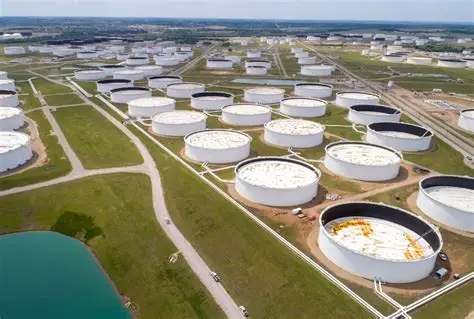
Refineries are the next big question mark. Ojulari said NNPC wants its refineries to be commercially viable and technologically competitive, and he was blunt about the lessons from earlier rehabilitation efforts. A so-called quick fix, he indicated, can leave a plant outdated within five to ten years, so the company is looking for something sturdier. As part of a wider portfolio review, NNPC plans to rationalize non-core and underperforming assets and revisit the ownership and operating models of key businesses, refineries included. The company says it has made progress with prospective partners under what it calls a Technical Equity Partnership model, and that any final deal will follow commercial and technical negotiations and depend on both sides agreeing terms. Fresh disclosures this week showed the scale of the support these plants have needed, with loans from the parent company to its subsidiaries surging more than fourfold in 2025 and over ₦220 billion going to the three refineries alone.
Then there’s the question of a public listing. Asked about a potential initial public offering, Ojulari said NNPC has started work on listing readiness and is identifying and closing the gaps required before it could list. No date has been set, and the company has been careful to describe this as preparation rather than a plan with a timetable. It does, however, line up with the broader message that the Petroleum Industry Act turned NNPC into a commercially driven company, with governance, transparency, technology and capital discipline cited as the pillars of its transformation.
Targets announced alongside the results show how much further the company wants to go. In the upstream segment, NNPC is aiming for daily production of 3 million barrels of oil and condensate and 12 billion standard cubic feet of gas through lower unit costs, portfolio rationalization and more deepwater output. On gas specifically, it is eyeing 10 billion cubic feet a day by 2027 and 12 billion by 2030, and says it wants to mobilize $60 billion across upstream, midstream and downstream activities. In trading, the company set a medium-term goal of lifting annual crude trading volume to 430 million barrels. Ojulari also addressed crude-backed financing, saying Project Gazelle remains in place, linked to production-sharing contracts and not affecting NNPC’s own equity crude production.
Operational numbers from earlier in the year help explain the confidence. In a one-year scorecard released in July, Ojulari reported an average 98 percent recovery across NNPC’s five crude export terminals between April 2025 and May 2026, compared with lows near one percent at the Bonny terminal back in June 2022, a stark measure of how much leakage and theft have been curbed. National crude output hit 1.71 million barrels a day at that time, the highest in five years, and NNPC Exploration and Production Limited set a record of 365,000 barrels a day. The company also said its agreements represent more than $20 billion in associated investment, with seven more commercial transactions in the pipeline.
The retail side of the business is moving too. This week NNPC filling stations trimmed petrol prices to ₦1,370 in Abuja and ₦1,360 in Lagos, following a cut at Dangote Refinery’s gantry. And in Ogun State, talks with the state government have reopened the long-stalled Olokola LNG project as part of a coastal development plan around a proposed deep sea port.
For anyone trying to read the direction of travel, the picture is of a company trying to behave less like a government department and more like a corporation answerable to returns. The skeptics’ counterpoint is just as clear: much of the improvement still depends on oil prices, on how smoothly the refinery partnerships come together, and on whether intra-group lending keeps growing faster than the revenue it supports. The next set of numbers, and any concrete move toward an IPO, will show which story wins.